


Proluma™ PDLLA Launch and CE Certification
2024-02-14
본문
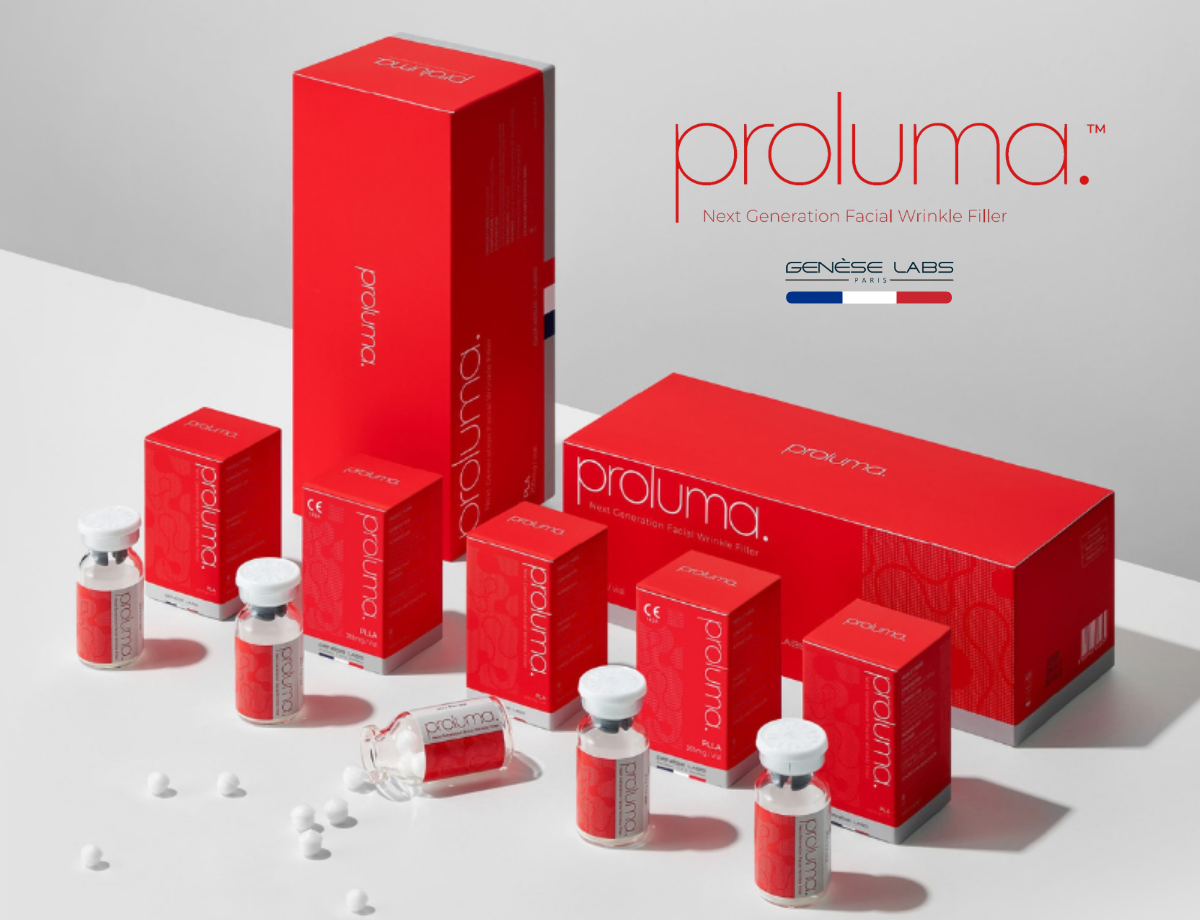
Next-generation collagen biostimulator: Proluma™ PDLLA 200 mg
Paris, France — 14 February 2024 — Genèse Labs has launched Proluma™ PDLLA, an injectable collagen stimulator built on polymer technology developed at the company’s French headquarters, together with completion of the Proluma™ trademark registration.
• Injectable collagen biostimulator based on Poly-D,L-lactic acid (PDLLA) 200 mg
• [Class III medical device holding CE 1434 certification — CE certification date to be confirmed internally: 2024 PDLLA launch vs 2025 PLLA launch]
• PLA-family materials recognised by the US FDA as safe and effective for use in medical devices, classified GRAS since 1984
• Onset of effect at 3–4 weeks with a duration of up to 18–24 months
• KFDA registration completed in Korea, verifying quality and production standards
A fundamentally different mode of action
Proluma™ PDLLA works in a fundamentally different way from hyaluronic-acid fillers. Where an HA filler delivers immediate but temporary results through the physical volume of the injected material itself, Proluma™ activates the body’s own collagen production beneath the skin. This regenerative process leads to gradual, natural improvement in skin texture, firmness and volume.
Main ingredient: Poly-D,L-lactic acid (PDLLA) 200 mg
PDLLA is a biodegradable polymer with a long history of medical use as a core material in surgical sutures, orthopaedic implants and drug-delivery systems. The US FDA recognises PLA-family materials as safe and effective for use in medical devices, and they have been classified as GRAS (Generally Recognized As Safe) since 1984. Sodium carboxymethyl cellulose (CMC) is used as a supporting suspending agent that helps disperse the particles uniformly; widely used across the medical and food industries and recognised as GRAS, CMC is listed in the FDA’s Inactive Ingredient Guide for intradermal, intramuscular, intravenous and subcutaneous injection.
Mechanism of action, in three stages
• Stage 1 — Fibroblast activation. Immune cells migrate to the injection site; among them, fibroblasts — the cells that produce collagen — play a central role in wound healing and tissue regeneration.
• Stage 2 — Collagen production. Stimulated by the presence of immune cells and by the breakdown products of PLA, fibroblasts begin to produce and organise new collagen fibres, progressively replacing the PLA structure with natural tissue.
• Stage 3 — Completed tissue regeneration. As the PLA fully degrades and is replaced by newly formed tissue, the collagen structure becomes better organised and tissue strength and function are restored. PDLLA undergoes hydrolysis into lactic acid, ultimately converted through metabolism into carbon dioxide and water and safely eliminated.
After treatment
An immediate volumising effect appears directly after injection. Between one and two weeks afterward, a temporary reduction in volume may be observed as water is absorbed by the body; from weeks four to eight, cellular activity and collagen synthesis begin and replenish the volume, ensuring a sustained result. [Cellular-response timelines beyond this general description are reserved for professional materials.
Clinical profile
Proluma™ PDLLA is recommended for patients in their 30s–40s presenting early signs of ageing, with treatment areas including the cheeks, temples, nasolabial folds and neck. It targets skin regeneration, fine lines and natural volume restoration, with onset of effect at 3–4 weeks, a duration of up to 18–24 months, and minimal downtime. It is suitable for both general aesthetic practitioners and experienced injectors.
PDLLA 200 mg and PLLA 365 mg
The Proluma line-up comprises two forms — PDLLA and PLLA. Both induce the skin’s natural regenerative response, but each is optimised for different treatment depths, indications and patient profiles. PDLLA 200 mg offers balanced collagen stimulation and smooth handling, making it well suited to early intervention, while PLLA 365 mg is specialised for structural volume restoration in the deeper layers.
Regulatory and certification status
[Proluma™ holds CE 1434 certification as a Class III medical device — the exact certification year is to be confirmed against company records before publication.] The material is PLA, recognised by the US FDA as a biocompatible polymer safe and effective for use in medical devices, and the product has completed KFDA registration in Korea, verifying quality and production standards.
“Proluma™ was designed to work with the skin’s own biology rather than against it — stimulating collagen where the patient needs it, and doing so with handling that a general practitioner can trust.” — Genèse Labs, Product statement
About Genèse Labs
Genèse Labs is a Paris-founded aesthetic company dedicated to science-based, regulatory-led product development across the fast-growing fields of body contouring, collagen biostimulation, and regenerative skincare. Since its foundation in 2019, the company has built its portfolio — including RG60®, Proluma™, Citrus Bottle™ and the Exoluma™ series — on three principles: scientifically verifiable formulations, regulatory compliance in every market entered, and continuous engagement with the international clinical and academic community. Genèse Labs partners with dermatologists, aesthetic physicians, and distributors worldwide to advance the standard of modern aesthetic medicine. For more information: www.geneselabs.net.
Contact
For distributor inquiries, collaborations, or product information, please contact:
- PrevCitrus Bottle™ Launch and CPNP Registration 24.04.22
- NextLaunch of RG60® HA Body Filler 23.09.25